Developing the Little Sun lamp was a long and arduous process for engineer Frederik Ottesen. Here, he shares his experience.
Engineer Frederik Ottesen and artist Olafur Eliasson both agreed they had designed a beautiful lamp.
However, following test sales of the initial prototype in the African market, they discovered that the design was difficult to sell to women and children—the intended target group. Only after a year of further product development—when the lamp was transformed from something resembling a smartphone into a small yellow sunflower with a shiny LED in the middle—did they achieve success. Now they can barely keep pace with demand.
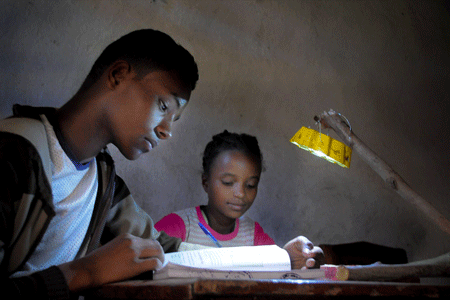
Today, Little Sun offers the 1.6 billion people without access to electricity a clean, reliable and inexpensive light source—one that DTU staff also received as a Christmas present last year.
The lamp generates ten times more light at a tenth of the cost of an ordinary paraffin lamp, which is the most common light source in many developing countries. Ottesen talks about penetrating a market far removed from his daily experience.
“Discovering that we had failed to design a lamp that appealed to our target group of women and children was quite a sobering experience. Due to our lack of understanding of their aesthetics, we were busy creating minimalist design for consumers without a minimalist mindset,” explains Frederik Ottesen, member of DTU Alumni and a former BEng graduate from DTU.
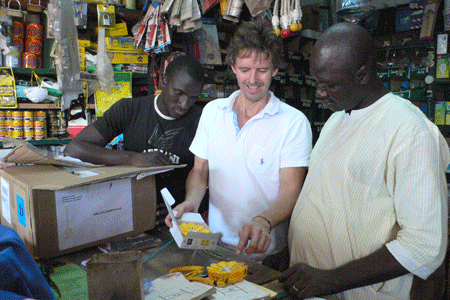
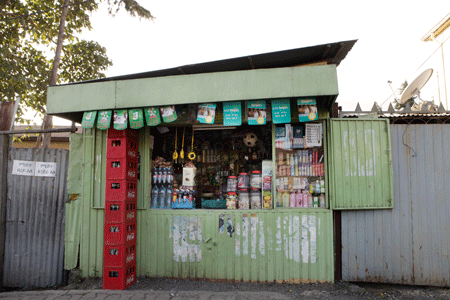
Following the initial market response, both he and Olafur Eliasson went through several rounds of soul-searching before they found themselves sitting in an Ethiopian market, fascinated by the colourful dress of the native women. They were there to ask women and children—in a town south of Addis Abeba—to describe in their own words beauty, progress and wealth.
They learned how colour-sensitive Ethiopians are and gained a better understanding of their aesthetics, adding this to Olafur Eliasson’s experience as an art and architecture teacher at Addis Abeba University.
All about feelings
“As an engineer, colour isn’t one of my major priorities, but I learned that colours are extremely important when it comes to selling a new product. With the yellow sun, we tapped into something that Ethiopians found beautiful. We were surprised that our target group attached so much importance to the lamp’s appearance. We needed the lamp to speak so powerfully to potential customers that they wanted to pick it up and find out more about it,” says Frederik Ottesen.
Together with Olafur Eliasson, he continues developing the lamp, which has become smaller, rounder and has more cooling room. To date, 170,000 lamps have been sold in nine African countries. The next step is to launch a Little Sun mobile charger. The aim is to create an energy business that supplies mini power grids that can power a radio and a TV.
Success for global brand
Little Sun, which is being launched as a global brand, is only the first step towards the vision of helping much of the world’s population living in areas without electricity. And the brand is garnering success. Most recently, finance giant Bloomberg Philanthropies has invested DKK 27m in the project.
“If I look back at the development process, Little Sun has taught me the importance of listening to feedback when presenting ideas. I’m often blind to things, which is why constructive criticism is so important. You have to be open to it.”