2,000 new STEM student places: Denmark’s interests are top priority
The goal of adding an additional 2,000 STEM student places is an important investment in Denmark’s future. But if this is to produce 2,000 more STEM graduates, the places must be created where young people are actually applying for them, writes President Anders Bjarklev in an opinion piece in Altinget.
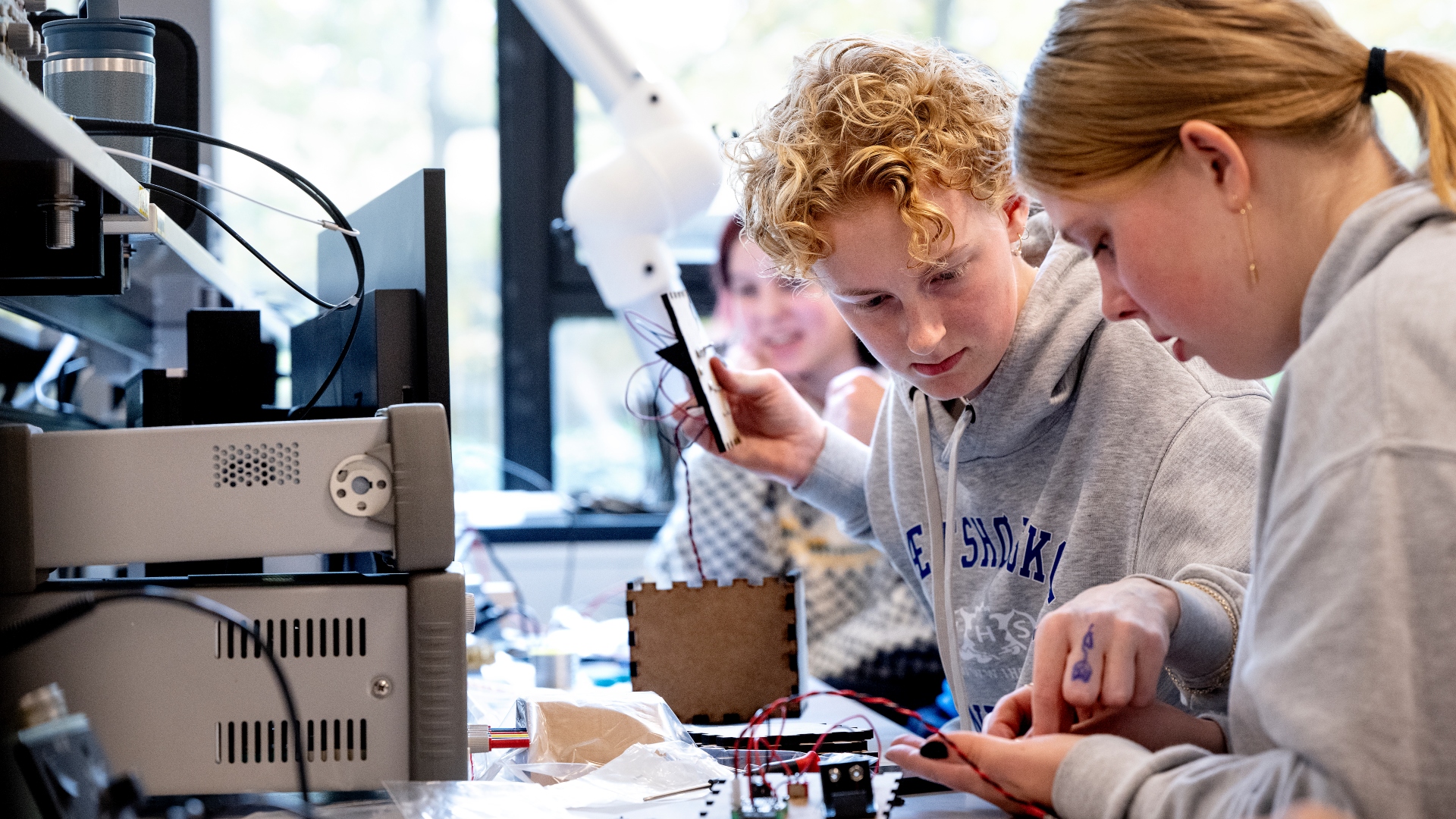
The allocation of 2,000 new STEM positions should not be based on geographical considerations, writes Anders Bjarklev in an opinion piece in Altinget. They should be located where demand is greatest. Photo: DTU
The Danish government’s goal of creating 2,000 new BSc places in the natural sciences, technology, engineering, and mathematics—the so-called STEM fields—is rooted in an overarching goal of “(…) creating new opportunities for development throughout Denmark.” In other words, not just in Western Denmark or Southern Denmark, but new opportunities across all of Denmark.
Nevertheless, that was precisely the one-sided regional focus described in the news media outlet Altinget the other day.
It’s an oversimplification that overlooks what is best for Denmark. Because to reduce the debate to a question of whether Jutland or the Greater Copenhagen area will receive the largest share of places is to reduce a national shortage of STEM competences to a regional special interest.
Since all of Denmark needs more STEM graduates to solve some of society’s greatest challenges, and since the business community’s demand for technical competences will only increase in the future, the 2,000 places should be created where students apply for them. So that they can benefit Denmark as a whole.
Popular engineering programmes
A good place to start is to ask: Which STEM programmes are the most popular? And which graduates find jobs?
The MSc Eng programme is a good example of this. For the third consecutive year, it is the most popular higher education programme in Denmark, which means that universities in major cities, including Aarhus University, have once again this year turned away qualified first-priority applicants due to limited enrolment capacity.
This year, DTU—which exclusively educate engineers—for example saw a record number of applicants. But more than 550 qualified young people were turned away. Not because of a lack of capacity. Not because of a lack of qualifications. No, simply because there aren’t enough places available.
Don’t do an East and West breakdown of employment figures
If we look at which STEM graduates find employment, I think it is necessary to return to the arguments presented in the above-mentioned opinion piece.
Here, the authors compare the employment rates of STEM graduates from Aarhus University with those of the overall group of STEM graduates from universities in the Greater Copenhagen area. For the first group, the employment rate is 89 per cent four to six years after graduation, while it is 15 percentage points lower for the second group. This comparison of apples and oranges is used to conclude that the demand for STEM graduates is greater in Western Denmark. However, this is not the case.
Because if we look specifically at STEM graduates from each Greater Copenhagen university, it’s another story. For example, calculations based on the latest figures from the Ministry of Science, Higher Education and Digital Affairs show that the unemployment rate for DTU 2023 graduates is just 2.9 per cent. It is the lowest graduate unemployment rate among all universities in Denmark, which shows us that engineers are a very popular group of professionals.
If we look at the overall group of engineers, the national average unemployment rate is also low. According to IDA—the trade union for engineers—it was just 3.8 per cent in April 2026.
These are figures that can be used to allocate the 2,000 STEM places wisely. Figures showing a group of professionals that companies are actually looking for—without a regional (East and West) breakdown of employment figures.
Offer education where demand is greatest
If the government wants to ensure that the political goal of 2,000 more STEM places also results in 2,000 more STEM graduates, the message is therefore clear:
Set aside regional considerations and offer education where demand is highest.
As is the case for Aarhus University, DTU of course also has an interest in securing a share of the new student places, but that should not overshadow the shared goal:
That Denmark needs more STEM competences to make progress in critical areas of national importance—including the green transition, digitalization, artificial intelligence, defence, health care, and Danish competitiveness.
In this opinion piece, engineers are singled out as a good example of a group of professionals in high demand.
But this message applies to all STEM programmes across Denmark where young applicants are being turned away, even as the business community requiring more: That’s where the student places should be created! With the goal of filling every single one of them—and, ultimately, for the benefit of Denmark.
Going with the other option would be futile value-based politics. And not in the best interest of society.