Cecilie Knudsen works to eliminate the need for detective work in diagnosing venomous snakebites with a rapid test. The test will ensure faster treatment for victims of one of the most neglected tropical diseases.
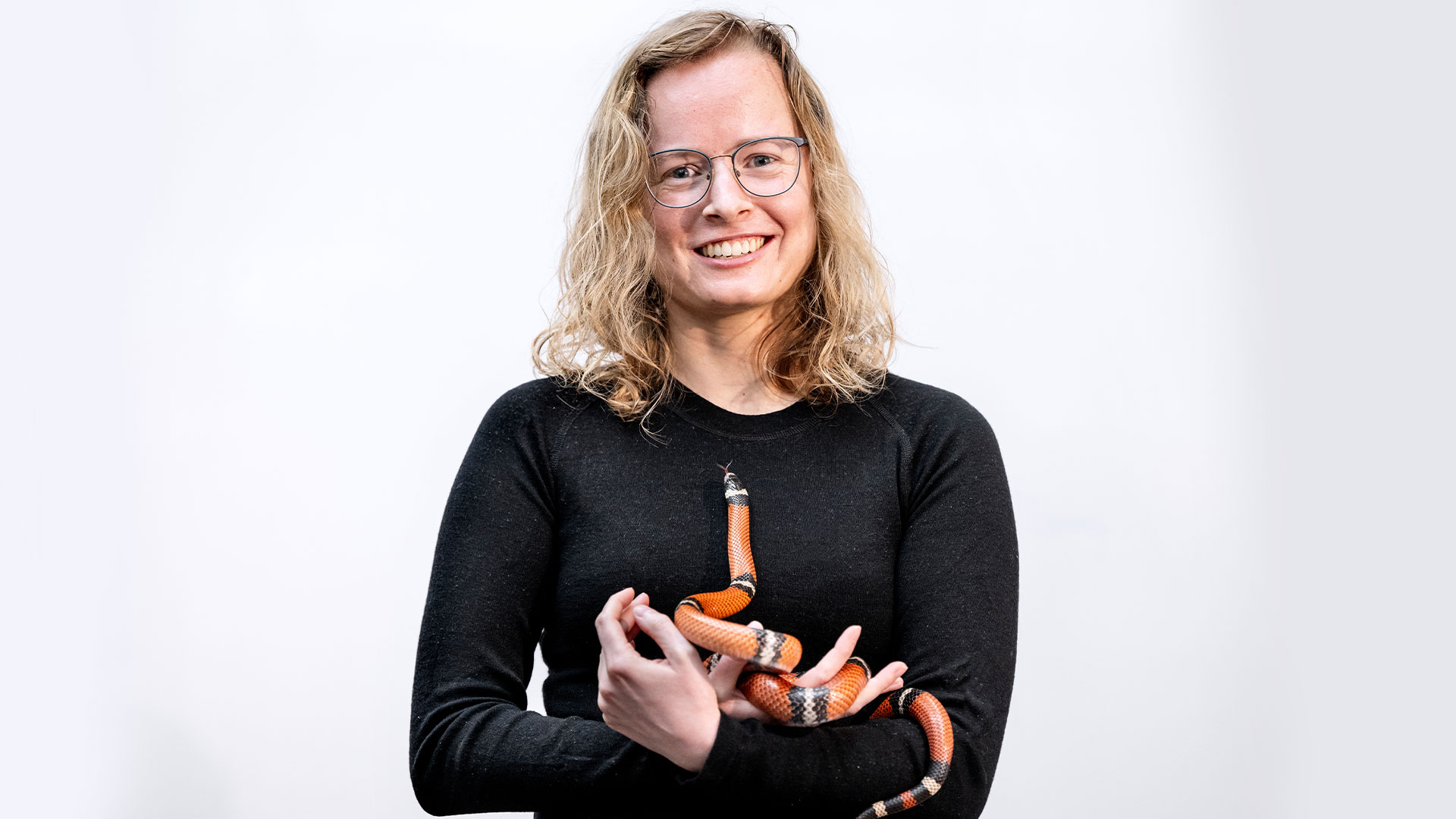
The vast majority of snakes around the world - such as this this Sinaloan milk snake from Copenhagen Zoo pictured with entrepreneur Cecilie Knudsen - are non-venemous. An encounter with a venemous snake can however lead to lead to both amputation and death. Photo: Bax Lindhardt
Monday 13 May 2024
Miriam Meister
She can probably best be described as an accidental entrepreneur. It was certainly not a dream of starting her own business that brought Cecilie Knudsen to DTU after she had obtained a bachelor’s degree in molecular biomedicine from the University of Copenhagen and had spent a gap year figuring out if she had chosen the right scientific career. In fact, entrepreneurship wasn’t on her radar at all.
“During that gap year, I saw that Andreas (Hougaard Laustsen-Kiel—professor at DTU, ed.) had posted about a thesis project working on developing snake antivenom. And for the first time since I began my studies, I thought: ‘Wow, this project was made for me,’” says Cecilie Knudsen.
Like the above-mentioned professor—who became her supervisor during the thesis writing—she is driven by a desire for research to benefit people. “His main priority is for the work to become something beyond just a research article, which aligns with my own values. That’s what’s great about science: You can use it to try to solve problems,” she explains.
WHO estimates that more than five million people worldwide are bitten by a snake every year. Snakebite envenoming occurs in up to half of these cases. These people risk losing life and limbs. Photo: Bax Lindhardt
From idea to startup
At DTU, Cecilie Knudsen was quickly introduced to the innovative mindset that permeates the University through the Invention Club—a place where students take turns coming up with and pitching ideas for something that could potentially become a patentable product.
“I thought that was really scary,” she recalls. “Because how the heck do you come up with a patentable idea on demand? No course had prepared me for that challenge. So, after panicking for a while, unsure of what to do, I came up with what ended up being the idea behind VenomAid, which is snakebite diagnostics. Because what use is making the world’s best antivenom if people don’t know which snake bit them?”
Fast forward seven years, and Cecilie Knudsen’s idea has become a successful startup. The team behind VenomAid also includes Jonas A. Jürgensen, one of four fellow students who, back in the Innovation Club days, were persuaded by the vision of developing a rapid test and helped found the startup as a side project to their master’s studies.
Over time, VenomAid has raised more than DKK 17 million for the development work, and the staff now includes five full-time employees, including an industrial PhD student. Cecilie Knudsen is pleased with how far the startup has come. “I’m very proud that we have employees. It may sound silly, but I think it’s super cool that I’ve helped create jobs and that we’ve attracted such talented employees,” she says with a big smile.
The test in a nutshell
Briefly put, VenomAid’s rapid test will reduce the need for detective work in diagnosing snakebites. As it is now, the treating physician has their work cut out for them in finding the right treatment. This is because different antivenoms must be used depending on which subgroup the snake belongs to.
“When the patient starts showing symptoms, the doctor has to employ a Sherlock Holmes-like approach and deduce that, with this combination of symptoms, and because they were in this area at this time of day, it’s most likely this type of snake,” Cecilie Knudsen explains.
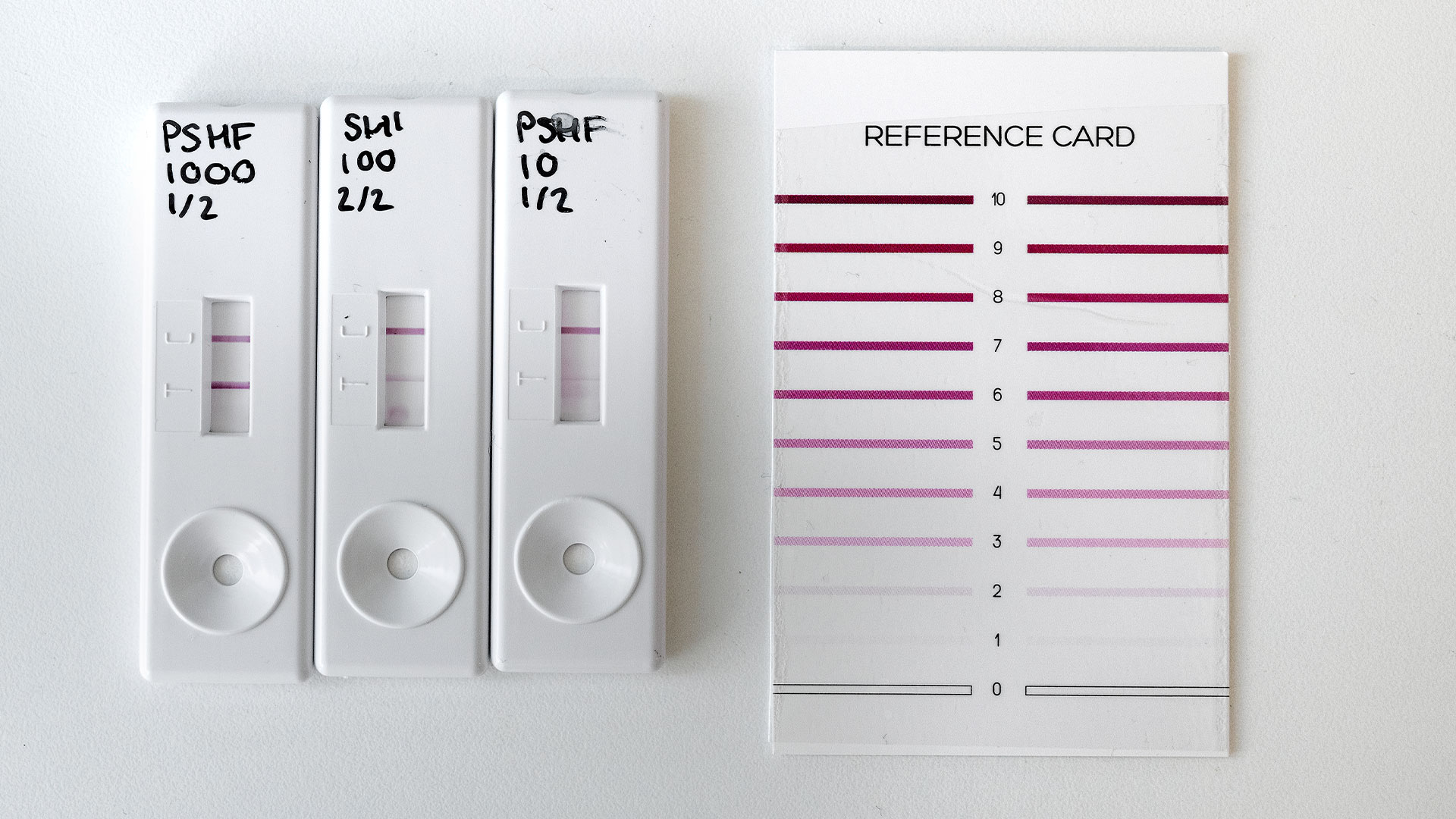
VenomAid’s rapid test is similar to the tests Danes became all too familiar with during the COVID pandemic. To activate the test, you need a few drops of blood from the snakebite victim—and within a few minutes, a line appears if a certain type of snake venom is present, and the patient can then receive the correct antivenom.
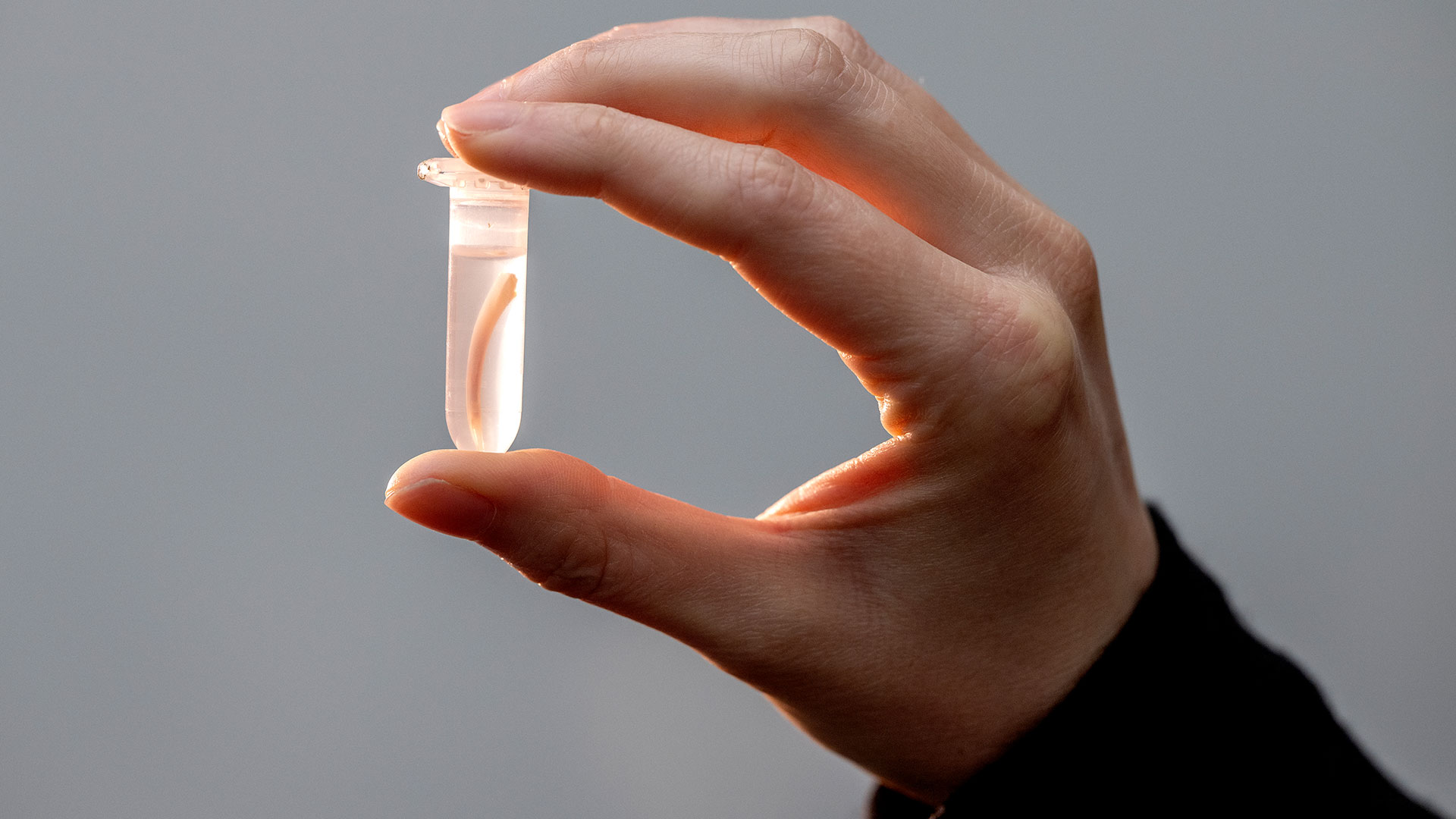
A rapid test for snakebite victims will take some of the guesswork out of figuring out what type of snake bit them. Photo: Bax Lindhardt
Fuelled by indignation
The World Health Organization (WHO) has named snakebite envenoming as one of the most neglected tropical diseases. For example, the way antivenoms are produced today is similar to the way antivenoms were made before Alexander Fleming discovered penicillin. The fact that snakebite treatment is largely neglected makes Cecilie Knudsen—in her own words—indignant.
“If this was a problem in Denmark or other countries with more resources, we would have developed a modern antivenom a long time ago. In my head, it’s something that belongs with the plague and the Black Death. It’s crazy to think how many are bitten and die or suffer due to snakebites. We must be able to do better.”
In terms of diagnosis, the methods are equally outdated. In fact, to their astonishment, the founders of VenomAid found virtually no easy, inexpensive diagnostic tests when they set out to research the market potential of their idea. Their product will therefore have no trouble filling a gap in the market.
“If our tests can help prevent a patient from losing life or limbs, then I can’t imagine a better product to work on,” says Cecilie Knudsen.
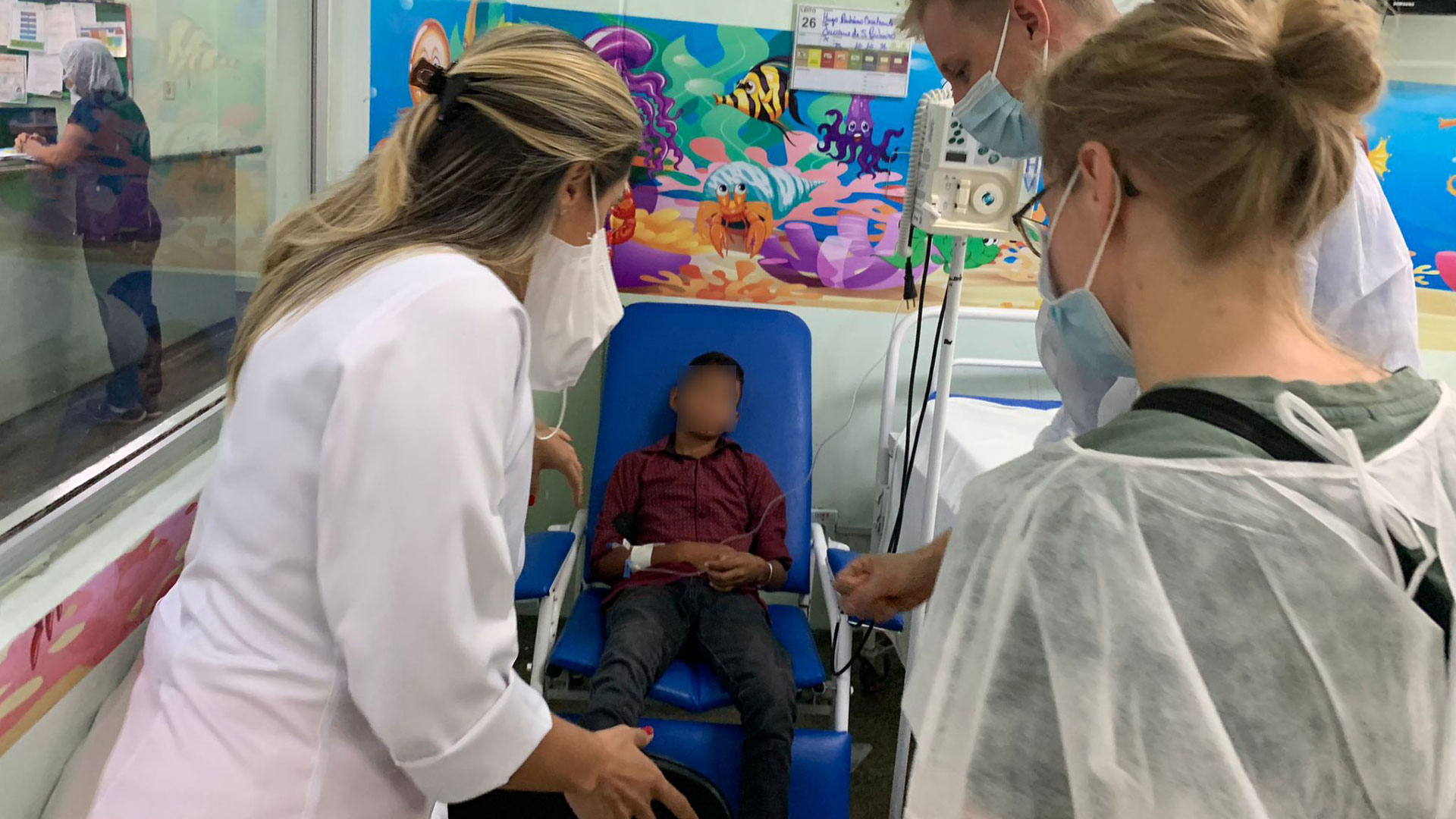
At a hospital in the Brazilian state of Amazonas, Cecilie Knudsen has seen the serious consequences of snake bites up close. Photo: Magnus Hertz
A global outlook
VenomAid’s test has been specially developed based on the state of Amazonas in Brazil. It can show whether a person has been bitten by a snake of the genus Bothrops, which are responsible for most snakebites in that area. The plan is to bring the test to the market within the next few years.
The work on the test has meant travelling to Brazil to gain insight into the working conditions of the treating physicians. The trips have also revealed various barriers that can prevent snakebite victims from getting medical treatment.
It could be that you live deep in the rainforest with an unrealistically long journey to medical care—or that you belong to an indigenous people who are convinced that if you are hospitalized and eat food prepared by strangers, you can become another person.
The trips have also given Cecilie Knudsen insight into some of the alternative treatment methods that people use in an attempt to cure snakebites—such as killing the snake, grinding the meat into a paste, and smearing it on the wound. At worst, these ‘treatments’ expose the patient to additional health hazards such as infections and also delay the patient in seeking qualified medical attention.
“I have become aware that there are many layers to snakebites—including cultural layers,” says Cecilie Knudsen. “We read a billion research articles on these issues, but there will be important information and obstacles that you won’t spot from behind your desk. It was very beneficial to meet and hear people’s stories.”
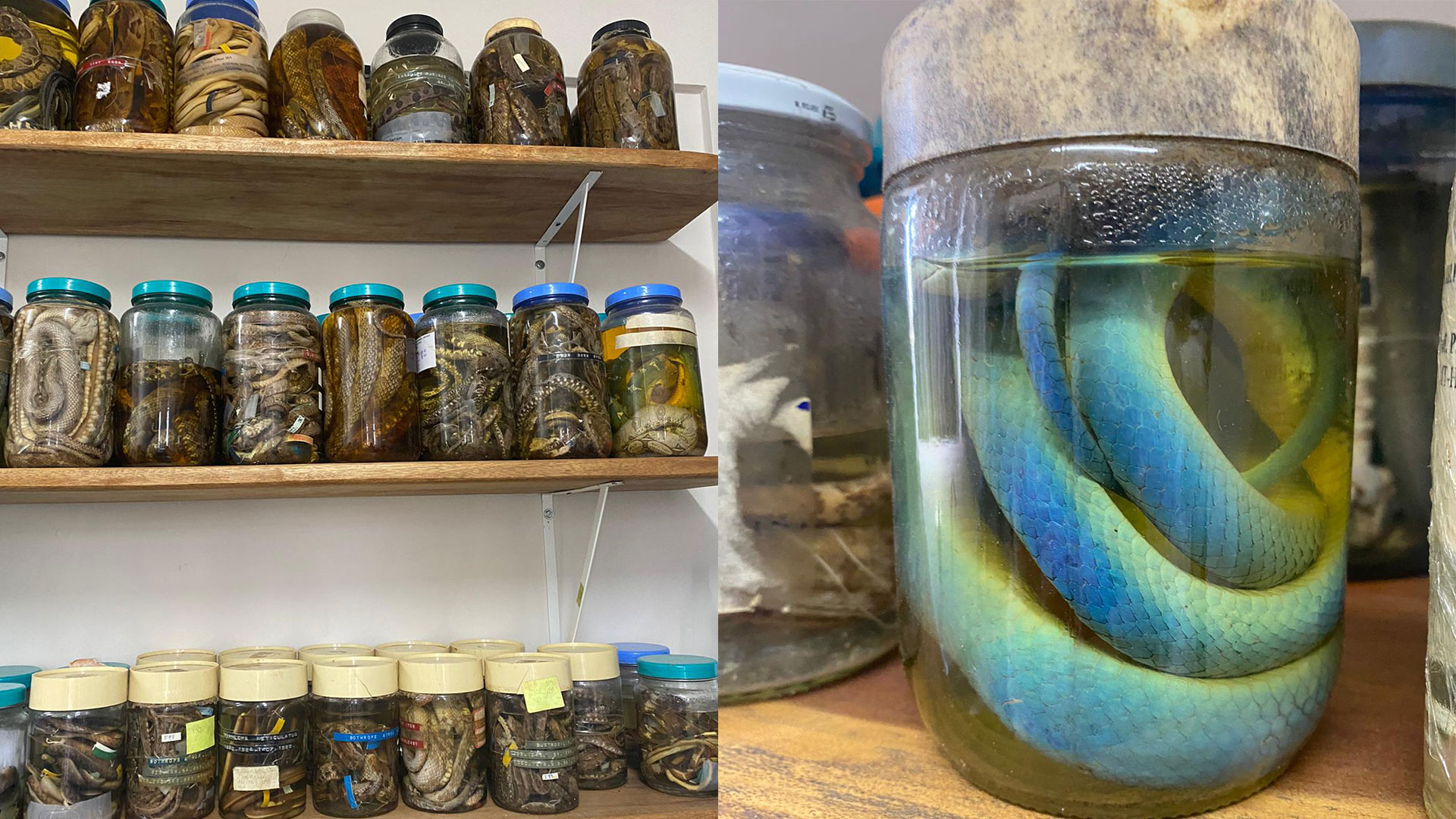
There are several thousand snakes in the world. Only a fraction are venomous. Here is a selection of the snakes found in Brazil. Photo: Cecilie Knudsen
Doing what you can
When Cecilie Knudsen tries to determine where her desire to do good comes from, her thoughts first turn to the many fantasy books she read in her childhood, where the good fight the bad. “No, I don’t know exactly where it comes from, but I think in general you should do what you can to make the world a better place, even if it sounds a bit cheesy or naïve,” she says.
The same approach applies to the task of communicating her research to the outside world: “I feel that not enough people care about the communication side of research, because the main act is the research itself. And it should be, but we also need to tell people why it’s exciting and why it’s important. Otherwise, it will be difficult to justify why we spend so much tax money on it.”
Personally, Cecilie Knudsen loves to talk about her work. And reaching the final in last year’s PhD Cup, where PhD students are given three minutes on TV to communicate a summary of three years’ research, clearly shows that she is good at it. However, she also admits to still suffering from stage fright, but stresses that practice makes perfect, and that she now feels confident going on stage.
For her, the PhD Cup was the culmination of her journey as a communicator—getting the opportunity to tell the world about her work on a completely different scale as a proud representative of DTU. “And it was the first time in my life that someone spray-painted my face with foundation,” she says with a laugh.
The future
Cecilie Knudsen attributes VenomAid’s success to the competent team behind it—a team that today, in addition to herself and Jonas A. Jürgensen, consists of Gina Ross, Pelle Degnegaard, and Selma Belfakir. As CEO, Jonas is responsible for the startup’s finances and he has an eye for the big picture and new opportunities, while Cecilie herself is good at identifying problems and coming up with plans A, B, and C to solve them: “In that way, I feel like we complement each other very well.”
Although Cecilie Knudsen is still deeply passionate about the project and has high expectations for the imminent product launch, she won’t rule out stepping aside to let others take VenomAid further, if that turns out to be best for the company.
“I love this project and think it’s so important and so exciting. I really want it to succeed. And then it’s mostly just a question of whether it can best succeed with or without me,” she says thoughtfully.
“I only truly found my place when I became part of this group. But I also think it’s important to keep moving forward, and I’m not 100% sure what’s next once VenomAid doesn’t need me anymore.”
The WHO estimates that more than five million people globally are bitten by a snake every year. Up to half of those also become envenomed and risk losing limbs or indeed their life.
Studies show that if more than six hours pass between bite and treatment, the clinical burden increases drastically. For instance, a correlation has been established between an extended waiting time and an increased risk of kidney damage as well as a longer course of illness.
The disease burden of various diseases is typically calculated in ‘disability-adjusted life years’ (DALYs), which include years of life in which people must live with a reduced quality of life and/or die earlier than expected as a result of the disease.