Ghost ships and sabotage
According to Peder Heiselberg, the tool can be used, among other things, to investigate incidents involving critical infrastructure such as internet cables, pipelines and offshore wind turbines.
“If a cable on the seabed is damaged, or something happens to an offshore installation, you can go in and see which vessels have been in the area, including those trying to hide. It provides a simple and quick overview of what has happened,” he says.
Monitoring Danish waters using satellite imagery is not in itself a novelty, and Danish authorities and services already have similar tools at their disposal.
But with this free tool, everyone will be able to keep track of who is sailing in Danish waters. And this could be relevant for curious members of the public, journalists and businesses, according to Peder Heiselberg:
“Specifically, it could be useful in, for example, insurance matters. But there could be all sorts of reasons to take an interest in who is sailing in our waters,” he says.
“It is only in recent years, particularly following the sabotage of Nord Stream 2, that we have truly realised that the threat to, for example, critical Danish infrastructure is real. In these circumstances, I think it is exciting that everyone now has the opportunity to keep track of what is happening in our waters,” explains Peder Heiselberg.
Trained to recognise ships from space
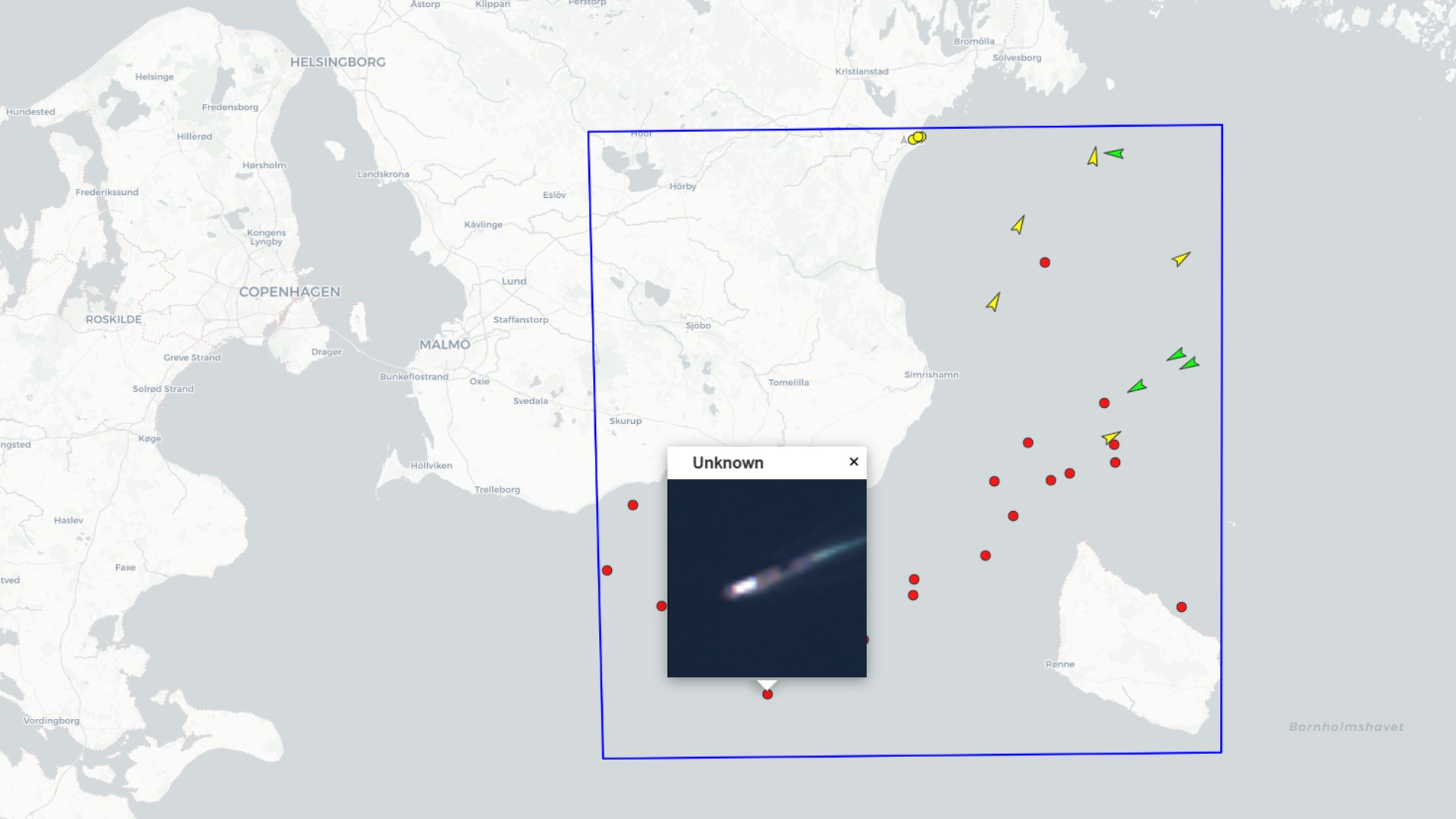
The artificial intelligence behind the tool has been trained on thousands of satellite images and objects and can therefore distinguish between, for example, ships, drilling platforms, waves and other features at sea.
In this way, the system can identify a vessel even when it is attempting to operate without visible identification.
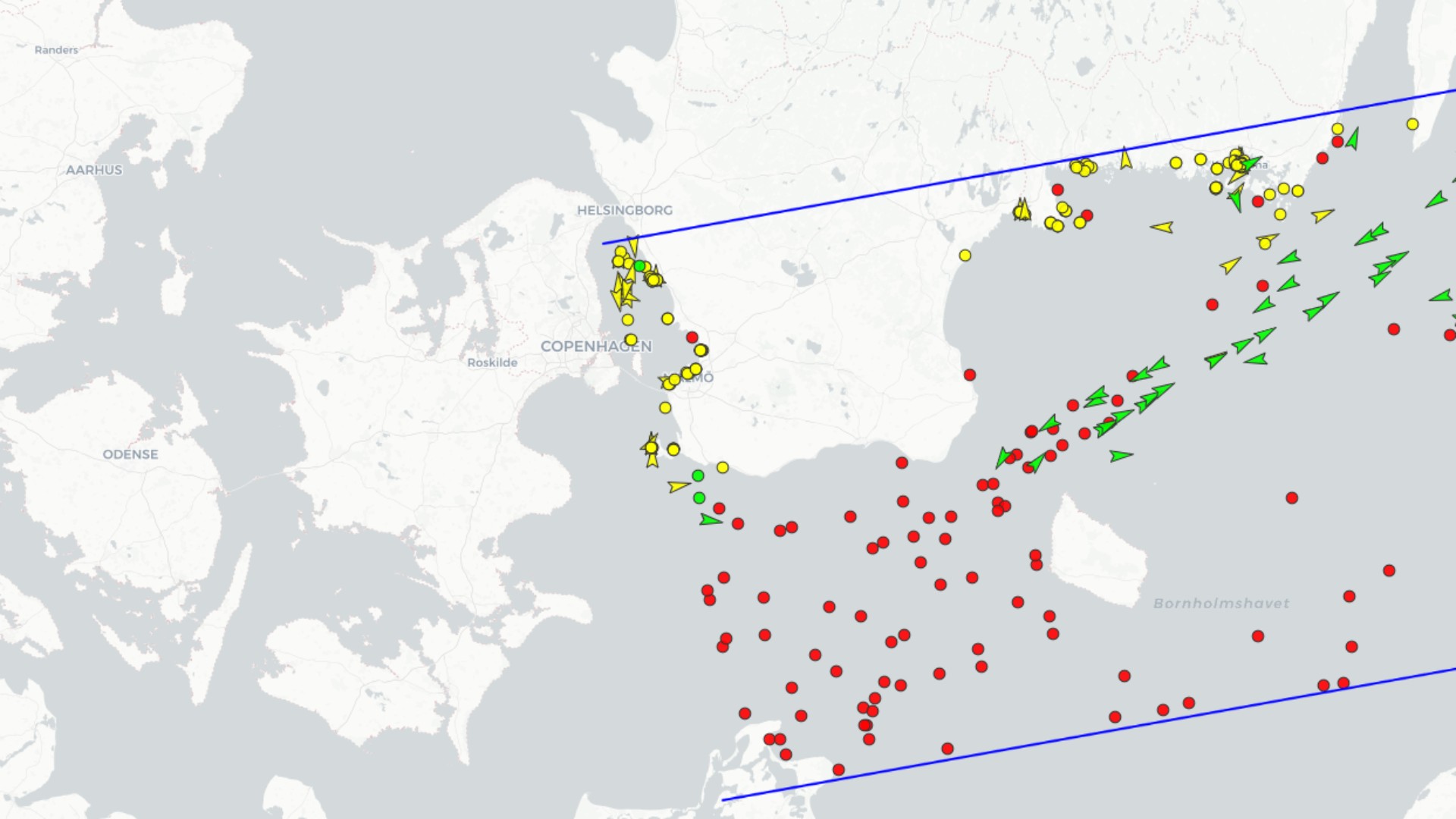
The system automatically cross-references the satellite observations with open databases of ships’ AIS signals. If there is a match, it is marked in green as verified traffic. If there is no match, it is marked in red. In cases where an AIS signal is present, but satellite photos do not show a ship, it is marked in yellow.
Although the tool has been trained on a vast array of different ships and satellite images, it can make errors, just as there may be errors in the open databases it utilises. A red marking cannot therefore be said with certainty to be a ‘ghost ship’.
The project stems from Peder Heiselberg’s PhD work and has been further developed with support from DTU Skylab through a Discovery Grant, which enables researchers to test and refine new ideas.