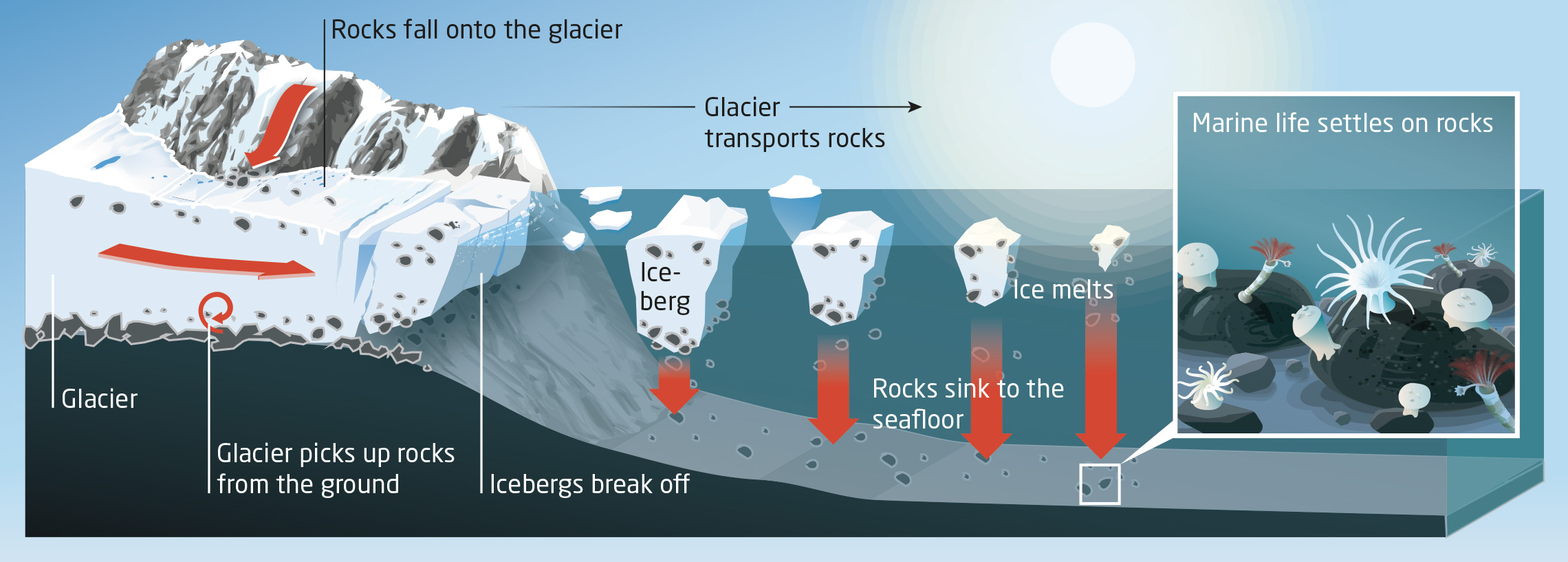
The researchers have combined nearly 40 years of observations of icebergs in the Fram Strait between Greenland and Svalbard with satellite data, sea-ice models, and seabed studies. The analysis shows that the number of icebergs has quadrupled since 2000.
The increase is linked to the fact that several large glaciers in Northeast Greenland have become less stable and are releasing more ice. At the same time, sea ice has shrunk and become more mobile, making it easier for icebergs to drift long distances through the Arctic.
“We know from measurements and satellite observations that the large glaciers in Northeast Greenland have lost stability over recent decades. The new study shows that the consequences do not stop at rising sea levels, but directly affect deep-sea ecosystems far from the glaciers,” emphasizes Shfaqat Abbas Khan.
At the same time, the study notes that the growing number of icebergs may pose new challenges for activities in the Arctic. As reduced sea ice opens new shipping routes, the risk increases that cruise ships and cargo vessels operating in or near ice-covered waters will encounter icebergs more often during their voyages.
The researchers therefore highlight the need for improved monitoring and warning systems for ice conditions to support shipping, fisheries, and other activities in the Arctic.
“The Arctic is responding faster to global warming than most other places on Earth. Therefore, it is crucial to understand the interaction between ice sheets, the ocean, and ecosystems. This knowledge is necessary if we are to predict and manage the consequences of future climate change,” says Shfaqat Abbas Khan.