My PhD

My research looks for clues that life could exist elsewhere in our galaxy

Prune Camille August uses the most powerful space science observatory ever built to look several light years into space in her search for potentially habitable worlds.

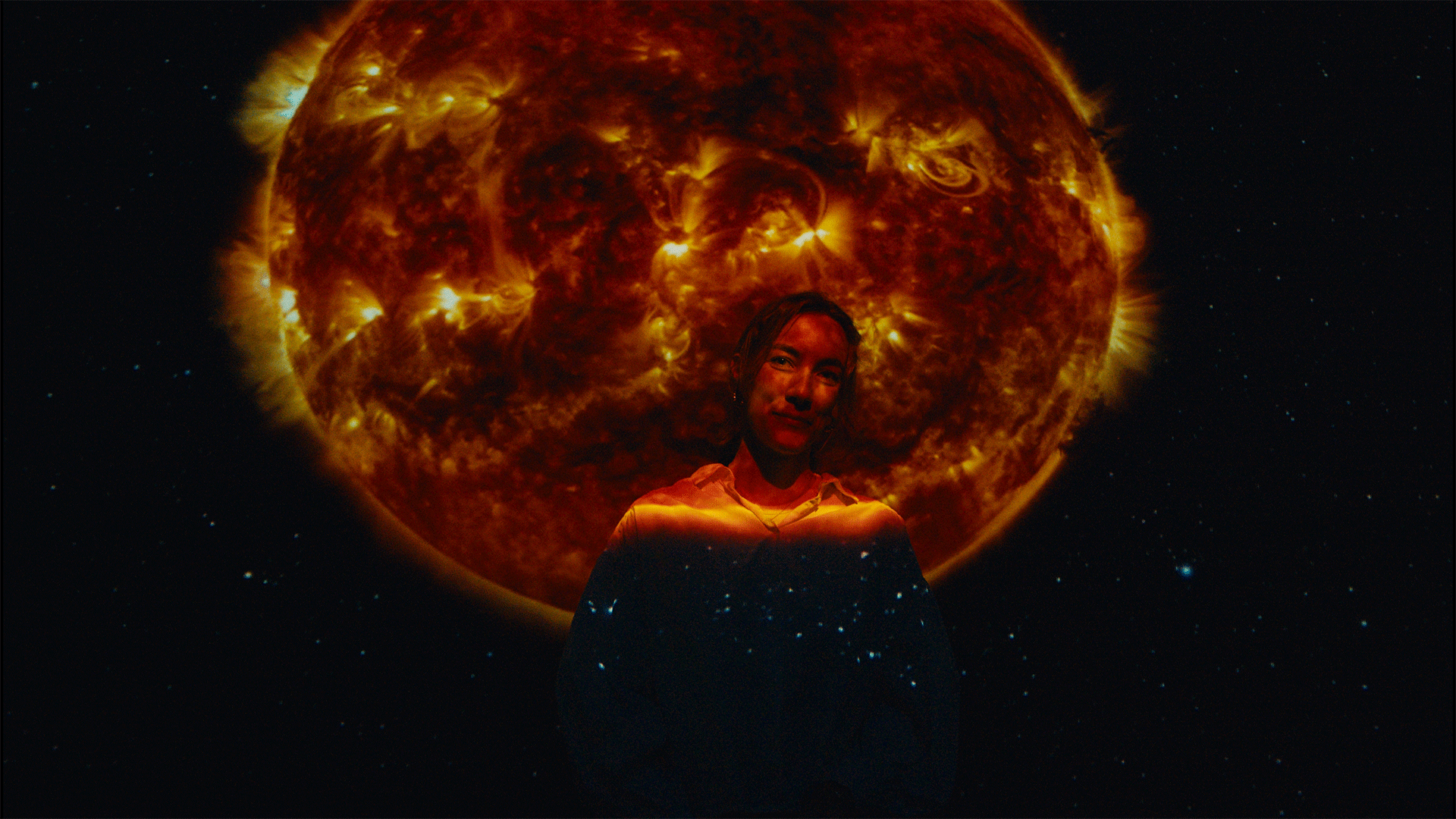
PhD student Prune Camille August in a portrait photo taken at the Plantetarium. Photo: DTU
In her PhD project, Prune Camille August is looking at exoplanets in our solar neighbourhood and in particular hunting for atmospheres around them. Photo: DTU

Facts

  • Name: Prune Camille August
  • Age: 26
  • Education: MSc in theoretical physics, École Polytechnique Fédérale de Lausanne
  • Project research field: Exoplanets
  • Project period: 2023-2026
  • Supervisors: Professor Lars A. Buchhave (main supervisor), Assistant Professor Alexander Rathcke (co-supervisor)

The research can contribute to …

… answering the age-old question of whether life does or can exist on other planets. Humans used to ask: Is there life behind this mountain, or on that island, or on our planetary neighbours? Now we are starting to have access to planets that are around other stars and so we want to know: Is there life outside of what we already know?

Another important element is that in our Solar System we only have a very small sample of objects telling us what a planet even is. Exoplanets offer the possibility of placing our planets in a broader context and may even help us understand our own Earth a bit better.

It has been a good day at work when … 

…I get new observations from the James Webb Space Telescope. Those are the best days, because there is intense competition to get observation time on this new big shiny instrument that can do all sorts of things. People submit proposals on a yearly basis: One has roughly a one in 12 chance of getting a proposal accepted, and the odds are worsening every year! 

Two years ago, I sent my proposal and was awarded time on the telescope, and this past year I received the first observations. It was quite humbling, because you're thinking: There's this big telescope in space and right now it's turning around and pointing at the star that I asked to point at, and it will be doing my little observation for a couple hours.

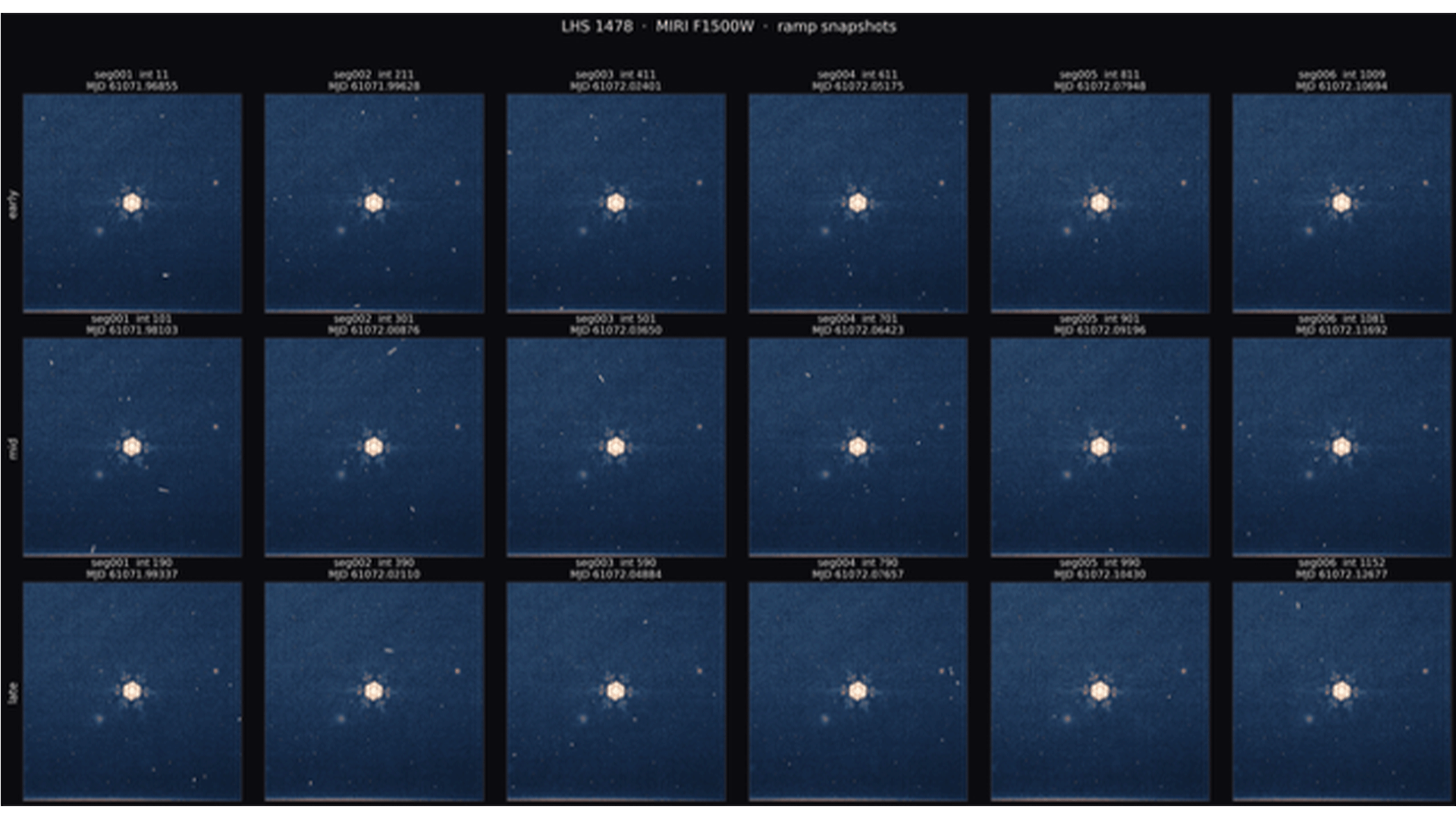
Images from the James Webb Space Telescope.
A range of snapshots taken during the James Webb Space Telescope’s observations of the LHS 1478 b system. Images: JWST GO 7675

I became a PhD student at DTU because … 

… of some happy coincidences. During the entire second year of my master’s, I did research in exoplanets at the University of Chicago. That’s how I fell in love with exoplanets and I started looking for PhD position in this field. 

I wrote to a bunch of professors around the world and Lars (who eventually became her PhD supervisor, ed.) told me that he was about to open a position and promised to let me know when he did. When he got back in touch, I applied and got it, which was exciting.

As a new employee, I was surprised by …

… how many activities I would have to fit into such a short, three-year program. I hadn’t realized all the obligations that came with a PhD position, like teaching and taking classes. I'm very passionate and excited about my research and I'm willing to invest a lot of time in my research and so I had to learn to also navigate this other checklist of things that I had to do to get my PhD.

My biggest challenge as a PhD student is …

… probably navigating the reality that sometimes you're treated as a student and sometimes, you're treated as an employee based on what your department needs from you. I have had a great advisor and so I didn't really have any challenges with my research or the guidance I got from him, which is helpful. I know that the advisor plays a big role in how well your PhD goes.

In the future, I would like to work with …

… research for as long as it keeps flowing naturally out of me basically and the circumstances allow it. But I'm very curious, and since I’ve never taken a gap year, I have no experience from “real world” science outside of academia. I don’t exclude switching to work in an area with “real world” applications, like remote sensing of Earth’s atmosphere and surface.

I've always envisioned that in my life I would start off doing science for like the first half and then make a transition in the second half into more policy or politics, because I think it is important to have scientists in leadership positions.

I relax from my work when …

I write songs and play the piano. I’ve always played music and done singing, but about two years ago, I started really writing my own stuff and learned how to put it out under the artist name Shezif. That’s been my main project outside of my PhD.

I recorded my first song in a studio in North Carolina in the USA while I was on my external stay at Harvard University and I’ve since worked with a producer in the UK. Turning my creative stuff into a reality that exists outside of my notes app and uploading it on a bunch of platforms has been fun.
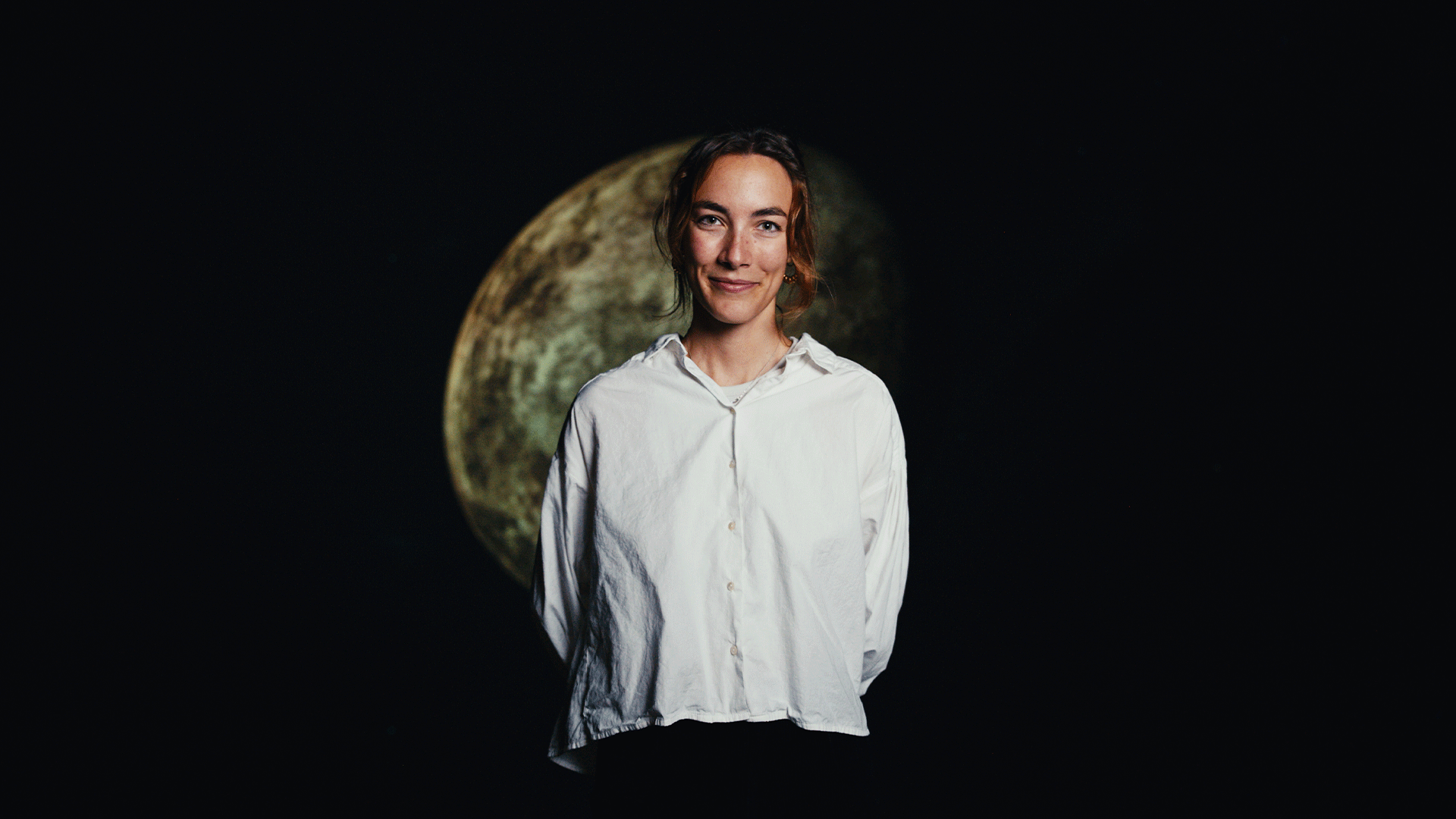
PhD student Prune Camille August in a portrait photo taken at the Plantetarium. Photo: DTU
In this video, which was filmed at the Planetarium in Copenhagen, Prune Camille August talks about her research. Video: DTU

Contact

Lars A. Buchhave

Lars A. Buchhave Professor Department of Space Research and Space Technology Mobile: +45 28910585