Innovation
Link: DTU's innovation ecosystem
Innovation
According to DTU Associate Professor Seyed Mansouri, openness are the most important driving force in innovation. If he gets a good idea, he shares it with as many people as possible. The value of the collaborations this has produced is far greater than the risk of losing ownership, he says.
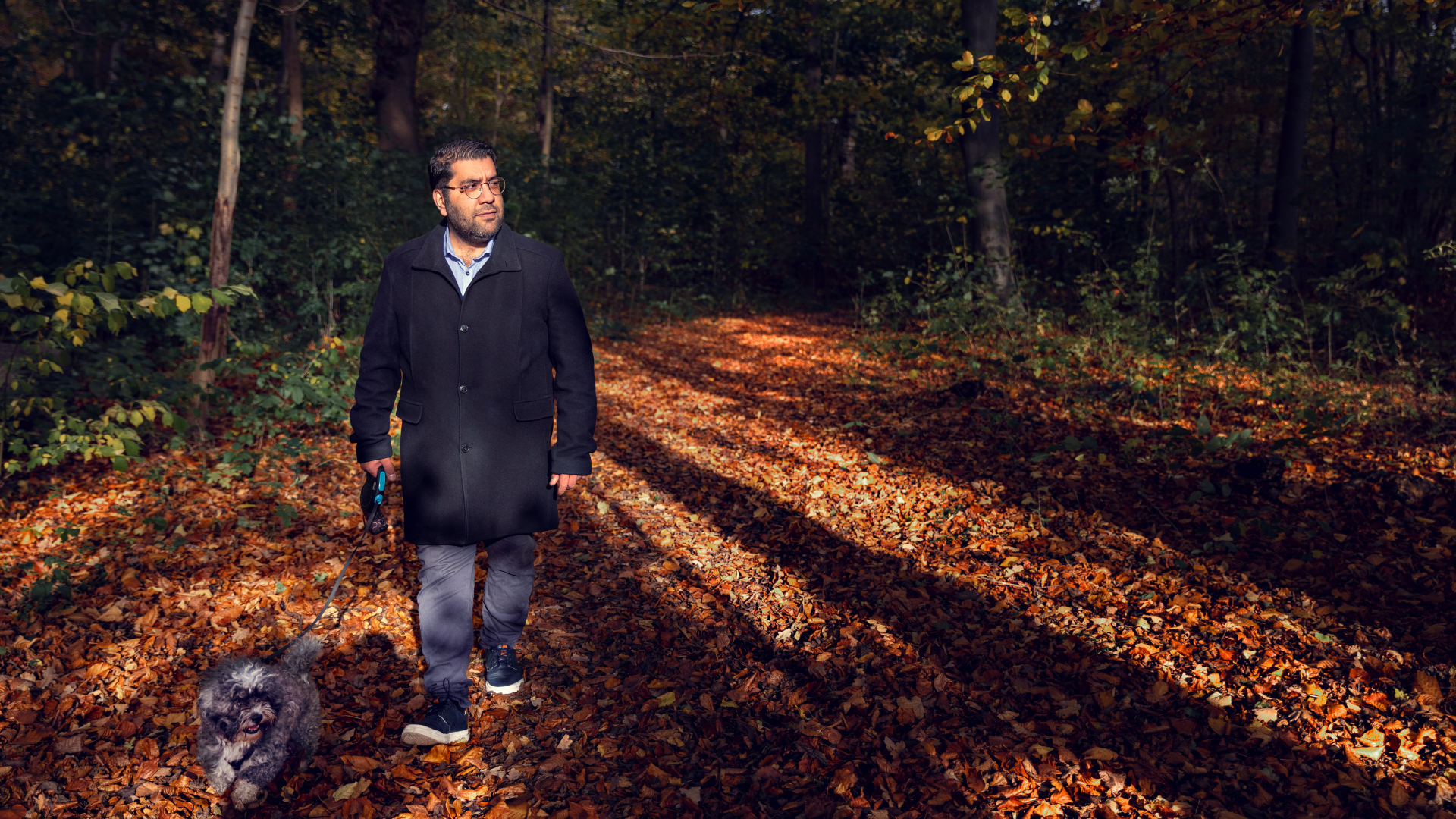
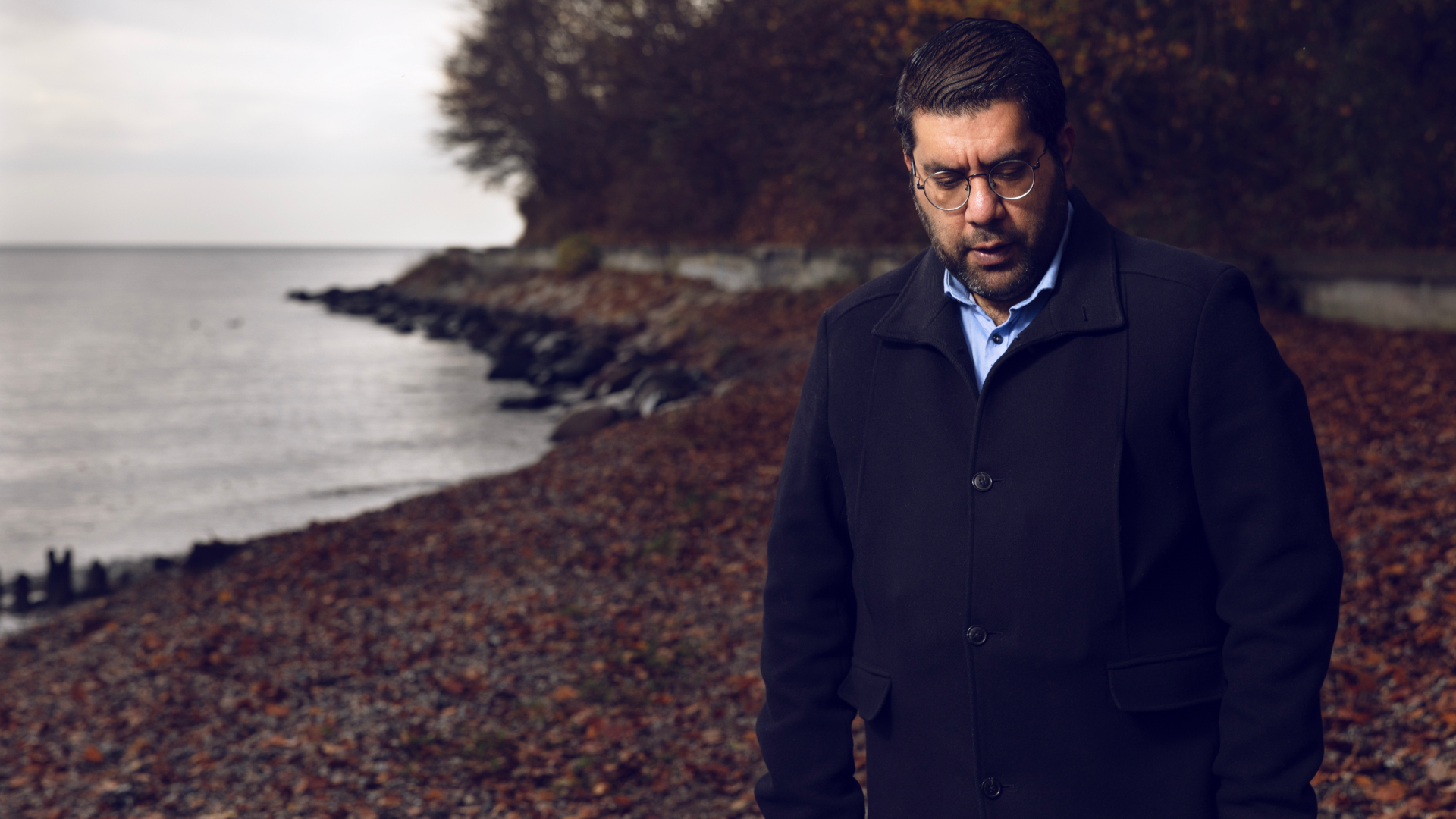
The reason why he keeps taking the risk again and again is that the fear of failure was turned into a driving force in him when - as a young high school student in the United States - he was faced with a crucial choice. In the wake of the terrorist attack on the World Trade Center on 11 September 2001 - as an emigrant from Iran - Mansouri was met with many prejudices from his surroundings. He could give up or he could fight to be accepted - and he chose the latter.
“I taught myself to focus on what I had in common with people, rather than focusing on what separated us. In this way, I built bridges between myself and others. Today, this is like a primal instinct in me: I have to put myself into play with other people. If I stay in my comfort zone, I won’t achieve anything,” he says.
This approach taught Mansouri to break down language, cultural, and social barriers between himself and the other high school students. Later on, his chemistry teacher Margaret became an important ally who taught him how to translate social skills and solid academic competency into concrete action. Mansouri remembers how one day she told him to go to the window and close his eyes.
“’What do you see?,’ she asked, and I replied: ‘I see nothing’. ‘Exactly,’ she said. “Precisely because you see nothing, there is nothing to prevent you from creating the world you want. Just close your eyes and imagine it’,” Seyed Mansouri recalls.
He remembers how buildings, shops, and people suddenly appeared from behind his closed eyelids. A entire small country, which he named Mansouri Land. Seyed Mansouri still travels to Mansouri Land today when something is difficult or cannot be done. Here he creates what he thinks is missing, and when he reopens his eyes, it seems less difficult to do it in reality.
Recently, the popular science news media sciencenews.dk wrote an article about Seyed Mansouri’s vaccine idea, which—with the help of the German students—became a viable business concept.
The heading was: “Containers for vaccine manufacturing might tackle local outbreaks and prevent future pandemics.”
The containers are still ‘only’ a drawing on a piece of paper and a lot of calculations showing that it can be done. It will take millions of kroner of funding to get them built and thoroughly tested, and it has also turned out that there is a competitor on the market working on exactly the same idea. The competitor has big muscles and lots of resources. Seyed Mansouri has himself and a group of students.
He nevertheless talks in details about the project and its future potential in the popular science article.
“What we have done here is actually the beginning of some sort of conceptual way of thinking. For example, the MOD production units can be used to cultivate novel types of protein such as microalgae or the like, to rapidly provide some source of food, making communities more resilient to famine, or they can even be repurposed for small-scale production of cancer vaccines,” he tells sciencenews.dk.
The dissemination of idea and knowledge is yet another example of Seyed Mansouri following his own rules when it comes to innovation. Without considering the competitor’s interests in his knowledge, he accepts that lifting the veil could mean that someone else wins the final sprint to the finish line.
“If someone can do something better than me - such as turning my idea into a business - let them do it. I do like money, but it isn’t the money that drives me,” he says.
Nor is it the striving for ownership, recognition, or honour that drives Mansouri. Something completely different is at stake. In his own words, he will not be able to live with a solution of benefit to society and with the potential to make life better for millions of people simply remaining a good idea. That is why he shares his ideas left, right, and centre.