Naval architecture in Frederikshavn

New maritime educational environment for naval architects in Frederikshavn

New marine engineering programme must meet growing shortages of naval architects in the industry. This will boost Frederikshavn’s maritime industry and secure Denmark’s position as a leading maritime nation. MARTEC, DTU, and Teknika are behind the programme.

Rasmus Høgenhaug  MARTEC
 What is special about North Jutland is that students gain direct access to a high‑tech industry, for example here at the Port of Frederikshavn. Photo: Rasmus Høgenhaug/MARTEC
DTU
HR Manager at Karstensens Skibsværft, Diddan R. Karstensen. Photo: DTU.

Essential to pass on knowledge

One of the places where the shortage of naval architects is felt is at Karstensens Skibsværft in Skagen—one of Northern Europe’s most significant shipyards. Here they are building pelagic fishing vessels, that are technically advanced ships designed for fishing in the open sea. While the hulls of the ships are being produced at the shipyard’s large department in Poland, there is a shortage of engineers with strong project management skills at the Skagen design studio—both for newbuild projects and in the repair department.

“Denmark does not compete on cheap labour, but on competences. We therefore need engineers who can communicate, understand complex processes, and ensure progress in collaboration with both design studio and production,” says HR Manager at Karstensens Skibsværft, Diddan R. Karstensen.

She explains that this combination is difficult to find among foreign naval architects, who often lack knowledge of pelagic fishing, waters, and the maritime culture in the North Atlantic. According to Diddan R. Karstensen, Karstensens Skibsværft has many experienced employees and close cooperation with customers, where they together drive innovation when new ships are built. Diddan R. Karstensen hopes to continue this important exchange of experience with newly qualified marine engineers in order to maintain the strong position and future-proof the industry’s competences.

“It’s a vulnerable situation if Denmark becomes too dependent on foreign labour. At some point, we risk that the jobs leave the country, which will be a hard blow in an area where the maritime industries are critical. So the future is about maintaining skilled craftsmanship and educating generalists with broad know-how and practical experience.”

DTU
DTU’s Senior Vice President, Carsten Orth Gaarn-Larsen and Jon Andersen, Mayor of Frederikshavn. Photo: DTU

Need for highly skilled workforce

The challenge permeates the entire area, where the expected growth in new activities and investments only reinforces the need for naval architects. Among the expected activities in the Port of Frederikshavn is a new assembly yard where ships are transported, assembled, and fitted out. At the same time, companies involved in shipbuilding, ship repair, offshore operations, energy, and maritime services will play an increasingly important role, says Jon Andersen, Mayor of Frederikshavn.

He points out that there are already several maritime companies in the area—including the maritime technology companies ME Production and Everllence, as well as the naval station which is currently expanding. Combined, this means that the marine engineering profession the entire area is seeing significant progress.

“If developments up here are to really take hold, we need a highly skilled workforce, which is exactly what can make our current efforts here long-lasting. It’s not just about finishing something—it’s about creating the opportunity to restart and re-establish an industry in a long-term perspective. And I’m pleased that DTU and MARTEC are placing the new BEng programme with the strong maritime industry here in Frederikshavn Municipality,” says Jon Andersen.

“The need will be great, and I’m convinced that the competences of naval architects can be used across industries. We will need the ability to calculate, draw, and convert—whether you work with shipping or production. And if we’re a bit more bold, we hope that this will develop into a new industrial adventure—just as we have experienced it in previous times of greatness.”

Voxpop

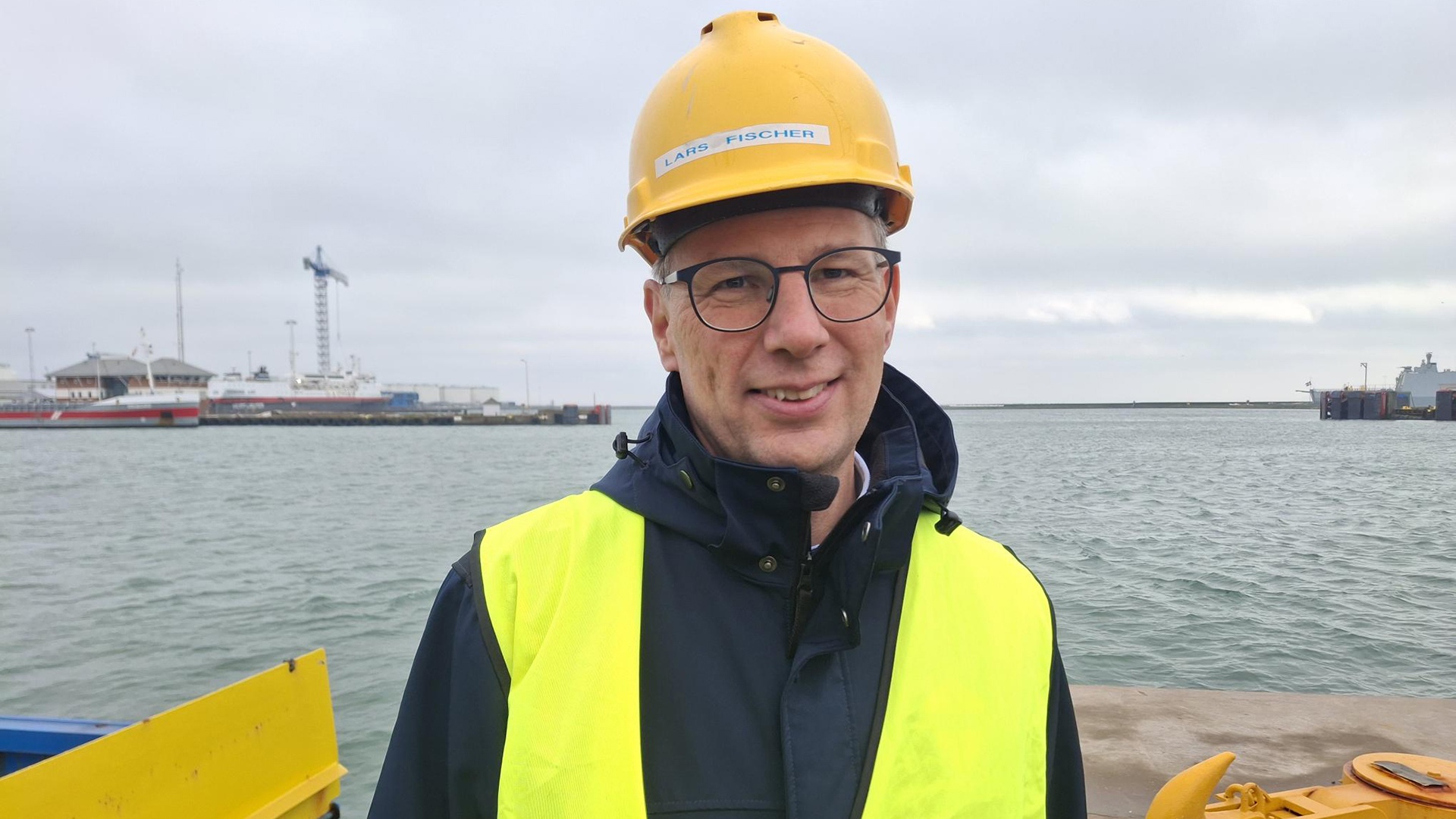
Lars Fischer—CEO, Orskov Yard A/S

“The new marine engineering programme means that we can bring in labour directly related to what we do. Repairing or retrofitting ships require many calculations—stability, strength, and much more. These are typical naval architects tasks.”

“We can choose to solve the tasks in-house or through a consultancy, but no matter what, we need this type of employees. There have been no qualified naval architects for a number of years, and there is a generational vacuum. We need new competences.”

“If we cannot get the skills we need, we risk not being able to perform our tasks. Then we may have to look abroad. And that’s a shame. We are a maritime nation with many shipping companies and several shipyards. And when we also look at building new ships, the need for naval architects is even greater.”

Orskov Yard is one of Denmark’s most important shipyards and specializes in ship repair, conversion, retrofit, and energy-efficient solutions.


DTU
Lars Fischer—CEO, Orskov Yard A/S. Photo: DTU

Voxpop

Palle Andersen, Engineering Manager, Hoyer VMS Group

“There are virtually no vacant people in the maritime sector right now, and with the expected fleet construction, this pressure will only mount. Many companies are already recruiting employees from Romania, China, and India to gain access to the necessary competences—not for the sake of price, but because the skills are available there. But the more we source from the outside, the more knowledge we lose. Ultimately, we won’t be competitive—the head office may remain in Denmark, but the expertise ends elsewhere.”

“We’re in the midst of a generational change. My engineers are 60+ and they take decades of experience with them when they retire. We have had 15-20 years without new naval architects, and the difference between industrial and maritime design is huge—on a ship everything has to be squeezed into a very tight space. We need new resources and fresh eyes.”

“New education can give us the right competences. We need young people who want to work in the maritime sector, and having the programme in Frederikshavn makes it easier to attract them. If they get a job with us, they will build a broad experience in ship design and retrofit solutions—Later, they can specialize in vibration, design optimizations, or energy optimization.”

Hoyer VMS Group is a global one-stop-lifetime partner for power and motion solutions, created through the merger of Hoyer and VMS Group in 2025. The company combines Hoyer’s engines, drives, and automation expertise with VMS Group’s extensive service and life cycle capabilities in power systems to support shipowners and industrial companies around the world.


DTU
Palle Andersen, Engineering Manager, Hoyer VMS Group. Photo: DTU