Get a Master's degree in Electrical Engineering

Master of Science (MSc) in Electrical Engineering

Electrical Engineering—from power production through electrical equipment to wireless communication and robots—has a significant impact on societal development. This development calls for highly qualified engineers with specialized expertise in one of the many disciplines of electrical engineering.
Electrical Engineering

Study Programme

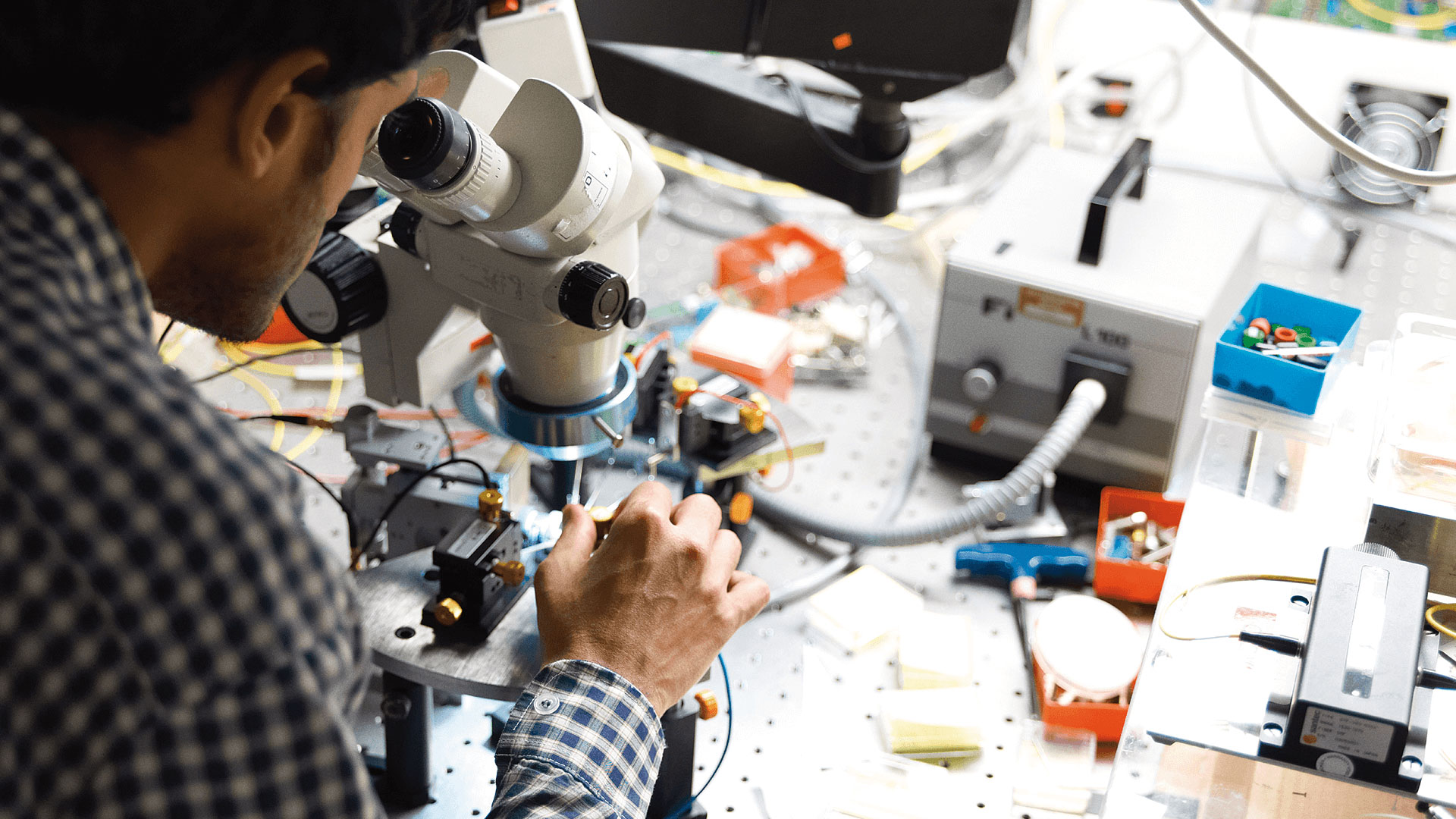
The MSc Eng programme in Electrical Engineering allows you to participate in work at all levels, including advanced theories, methods, and components for practical systems and applications in, e.g., satellites, robots, and wind turbines. You will learn to understand the theory and apply mathematical methods for designing or analysing problems in a given area.

Focus is on systematic problem solving and synthesis, and you will acquire specialized knowledge in an area of your own choice. More specifically, the study programme will provide you with sound hands-on experience through laboratory work and the application of IT-based design tools.

The MSc Eng is a two-year graduate programme with a workload of 120 ECTS credit points.

Specializations

The MSc programme in Electrical Engineering allows you to follow one of these specializations:

You should be aware, however, that your choice of courses in your individual study plan offers a high degree of flexibility. Therefore, you have every opportunity to design your own study programme and career by choosing from the wide range of courses offered at DTU. You are responsible for ensuring consistency when designing your study plan.

Combine work with study!

You have the the opportunity to join an Industry Master of Science in all DTU's master's programmes.

Combining work and study, an industry master's programme is the ideal way to apply your academic knowledge in real-world settings and build a strong foundation for your future career.
Learn more about the Industry MSc

Career

The MSc in Electrical Engineering at DTU provides you with the qualifications that research and development engineers in the private sector are required to possess. You might get the opportunity to continue your studies and do a PhD, for instance at DTU.

Typical fields of work

The Danish electrical engineering industry covers a wide range of areas, including production and development in areas such as electricity, audiology, medical electronics, mobile communication, radar technology, and satellite communication.

There are numerous areas of activity. With your extensive technical knowledge, you will generally form part of a team of specialists analysing the problems and finding solutions that meet user and customer needs. You will typically be involved in long-term 6 to 12-month projects with main focus on planning, coordination, and performance.

Career opportunities

The MSc in Electrical Engineering offers extensive career opportunities. You can be employed with all types of companies—from large multinational groups to small businesses with few employees. You can also pursue an international career, either through a Danish company or directly with a company abroad. Furthermore, you can become self-employed and start your own business.

Pursue a PhD

Once you have an MSc in Engineering, you might get the opportunity to continue your studies and apply for admission to the three-year PhD, which at DTU is a research-based programme ranking among the best in the world. You can do either a regular PhD or an industrial PhD, the latter with concurrent employment in a company.

As a PhD student, you will be part of a research group and will carry out an independent scientific project.

Learn more about DTU's PhD programme

Application and admission

Admission requirements

Learn more about the academic requirements and the selection criteria for this programme.

How to apply

All you need to know about applying for admission to an MSc programme at DTU.

Any questions?